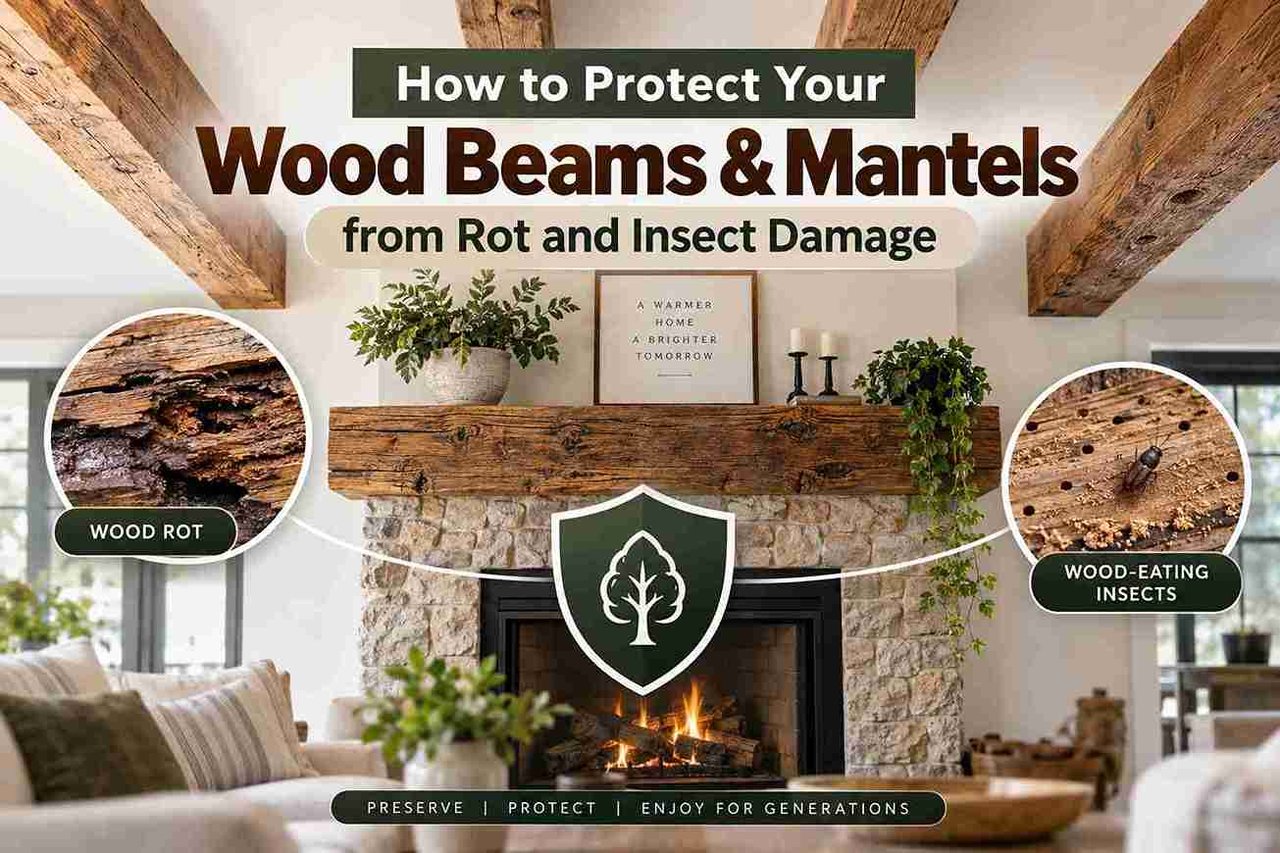
Wood beams and mantels bring warmth, character, and timeless charm to any home. Whether you have a rustic exposed-beam ceiling or a beautifully crafted fireplace mantel, these wood features are meant to last for generations. But wood is a natural material, and without the right care, it's vulnerable to two of its biggest enemies: rot and wood-eating insects.
Left unchecked, either problem can quietly weaken your beams and mantels from the inside out, turning a stunning architectural feature into a costly repair. The good news is that both issues are preventable and if caught early, treatable once you know what to look for.
In this guide, we'll walk through how to protect your wood beams and mantels, how to spot early warning signs, and when it's time to call in a professional.
Understanding the Two Biggest Threats to Wood Beams
Before you can protect your wood features, it helps to understand what you're protecting them from.
1. Wood Rot
Wood rot happens when moisture becomes trapped in wood over time, allowing fungi to break down the wood fibers. It often starts small a slightly discolored patch or a soft spot but can spread quickly if the moisture source isn't addressed.
2. Wood-Eating Insects
Insects like powder post beetles feed on the starches inside wood, tunneling through beams and mantels and leaving behind small exit holes and fine, powder-like dust. Because much of the damage happens inside the wood, an infestation can go unnoticed for a long time before it becomes serious.
Both problems share a common thread: they thrive when wood is exposed to excess moisture, poor ventilation, or untreated surfaces which means many of the same prevention strategies protect against both.
How to Protect Your Wood Beams from Rot
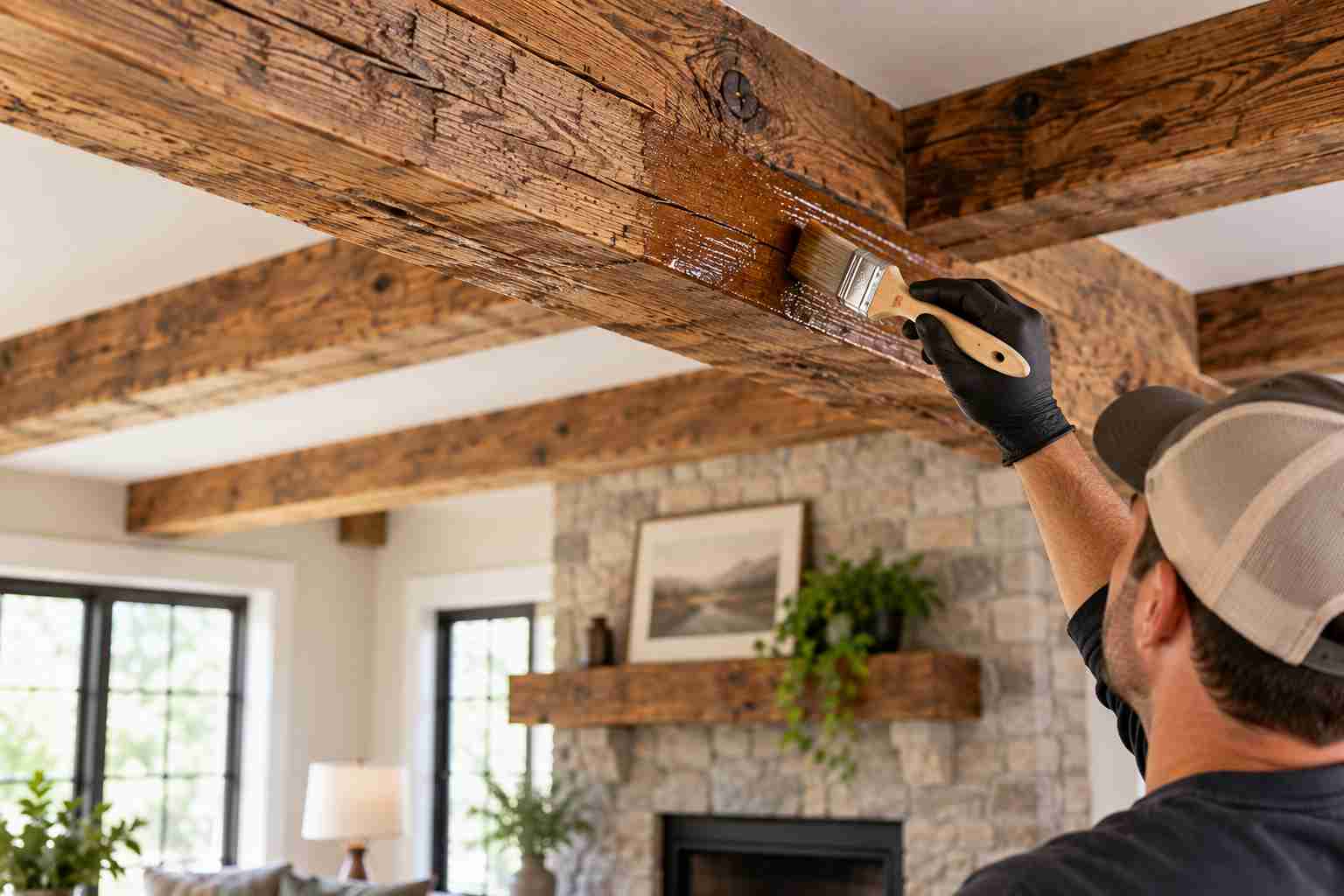
Moisture control is the single most effective way to prevent wood rot. Here's how to stay ahead of it:
Control humidity indoors. Use dehumidifiers or proper ventilation in rooms with exposed beams, especially bathrooms, kitchens, and basements.
Seal and finish exposed wood. A quality sealant or finish creates a barrier against moisture absorption.
Fix leaks immediately. Roof leaks, plumbing leaks, or condensation near beams should be repaired right away, before moisture has a chance to soak into the wood.
Inspect regularly. Check beams and mantels seasonally for discoloration, soft spots, or a musty smell all early indicators of rot.
If you're already noticing dark staining, crumbling texture, or a spongy feel when you press on the wood, these are common causes and signs of wood rot that are worth addressing quickly before the damage spreads and turns into a much bigger repair.
How to Protect Your Wood Beams from Insect Damage
Wood-eating insects are trickier to spot early because their activity happens beneath the surface. A proactive approach makes all the difference:
Use treated or kiln-dried wood. Properly dried and treated lumber is far less attractive to wood-boring insects.
Apply protective finishes. Sealants and borate-based treatments can help deter insects from laying eggs in the wood.
Watch for small, round exit holes. These pinhole-sized openings, often paired with fine powdery frass beneath the beam, are a telltale sign of activity.
Keep firewood and scrap wood away from your home. Storing untreated wood near your house can introduce insects that eventually migrate to structural beams.
Schedule periodic inspections. Catching an infestation early can mean the difference between a simple treatment and a full beam replacement.
If you've spotted small holes, sawdust-like piles, or unexplained weakening in your beams or mantel, these are classic signs of an active powder post beetle infestation, and it's best not to wait before treating it.
Why Prevention Matters More Than Repair
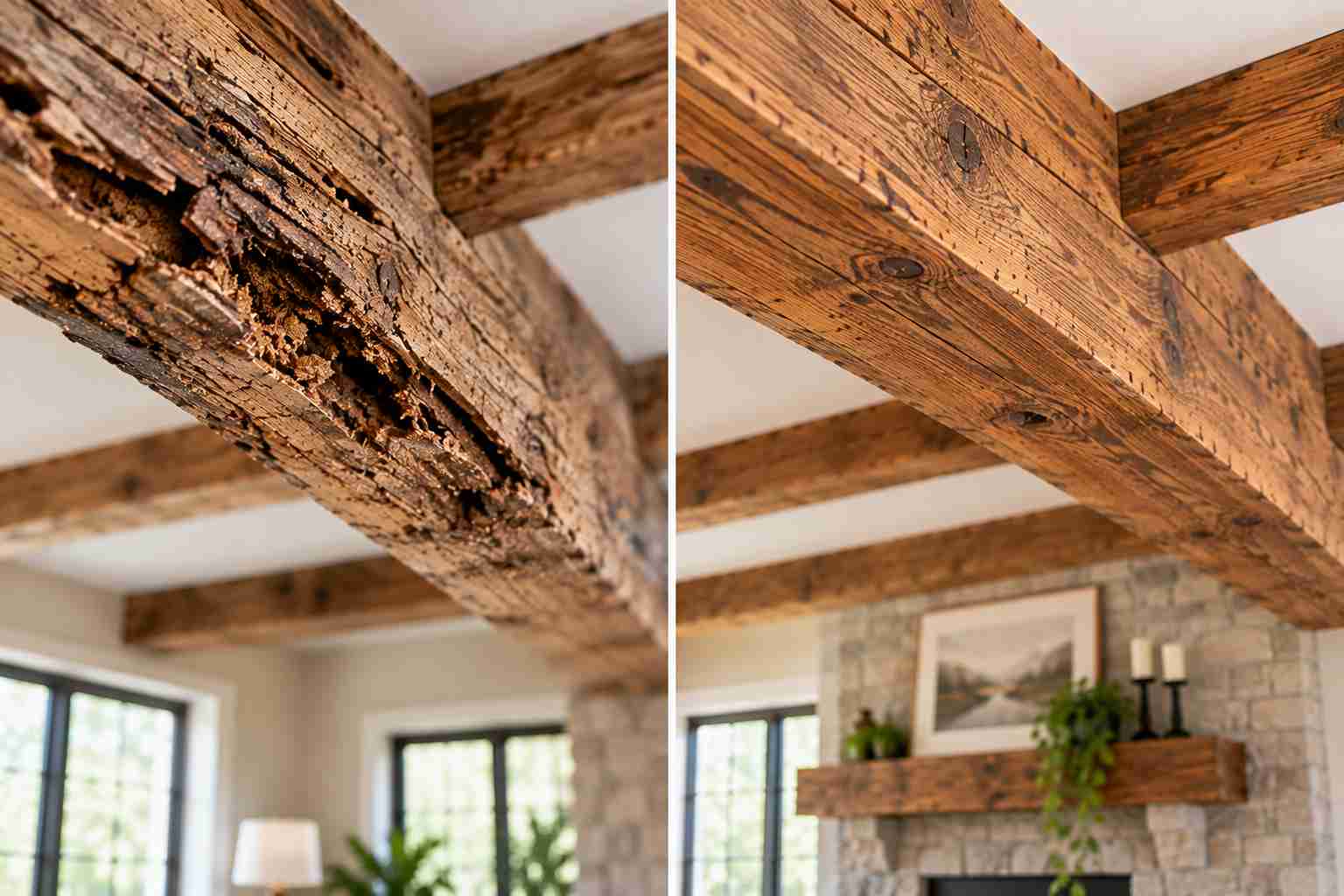
Both rot and insect damage tend to start small and stay hidden which is exactly why they become expensive. A beam that looks structurally sound on the outside can be significantly weakened underneath by either problem. Regular inspection, moisture control, and proper wood treatment are far more cost-effective than replacing a load-bearing beam or a custom mantel down the line.
If you do discover damage, it's important to act quickly:
Identify the cause (moisture vs. insects sometimes both).
Assess the extent of the damage.
Decide between spot repair, refinishing, or full replacement.
Address the root cause so the problem doesn't return.
When to Call a Professional
Minor surface issues can sometimes be handled with a good sealant or a simple repair. But if you notice structural softness, widespread insect activity, or damage to a load-bearing beam, it's time to bring in a professional. A trained eye can tell the difference between cosmetic wear and a genuine structural concern and can recommend whether repair or replacement is the smarter long-term investment.
Final Thoughts
Your wood beams and mantel are more than just decorative features they're an investment in the character and value of your home. By controlling moisture, watching for early warning signs, and knowing the difference between rot and insect damage, you can catch problems before they become expensive repairs.
Protect and Restore Your Wood Features with Kustom Beams
Whether your beams or mantel are showing early signs of rot, insect damage, or just need a refresh, our team specializes in custom wood beams, mantels, and architectural wood features built to last. From repair to full restoration, we help homeowners protect the wood elements that make their homes unique.
Contact Kustom Beams today for an inspection or consultation, and keep your wood beams and mantel beautiful and structurally sound for years to come.